
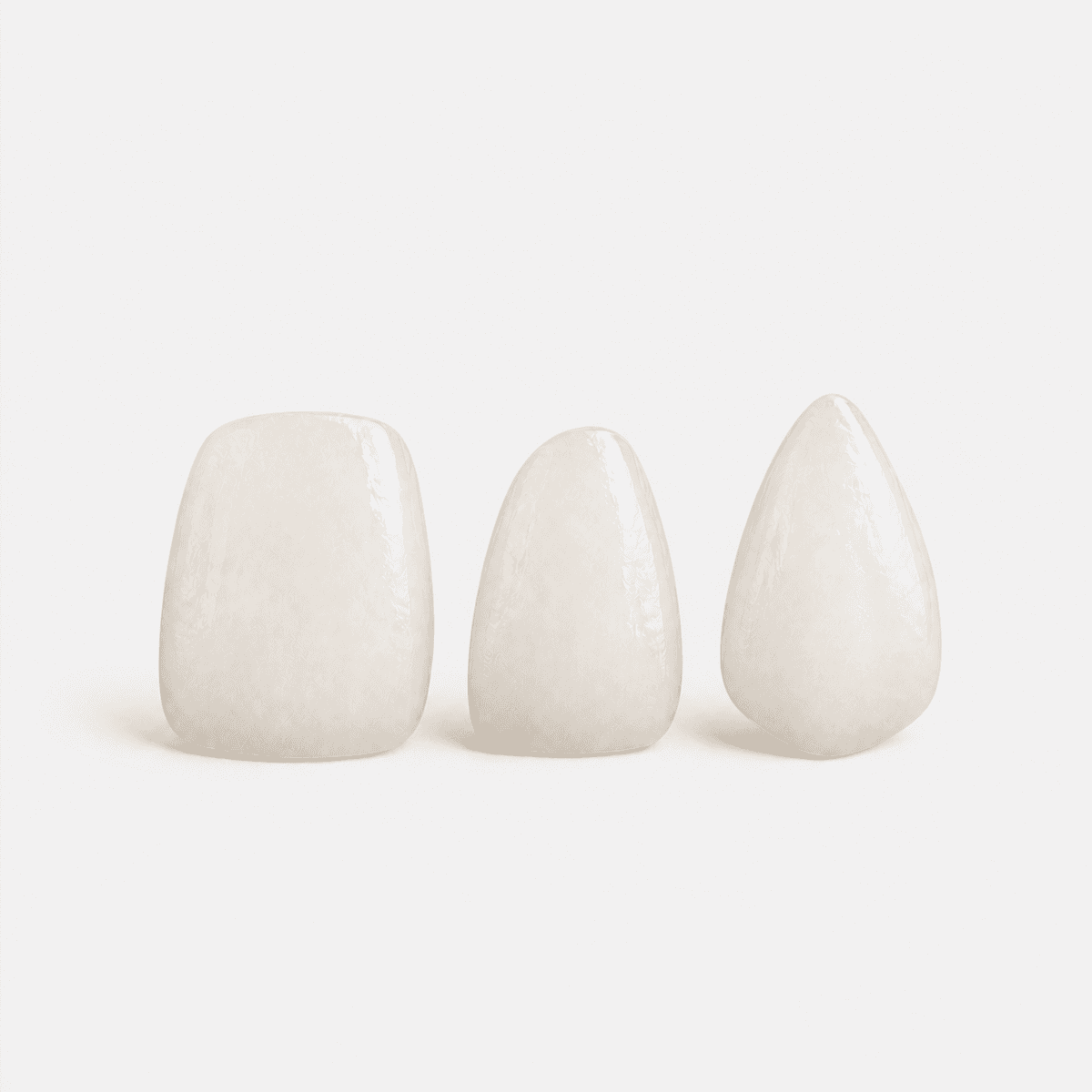
Dental Veneers Lab
Cosmetic cases live and die on esthetics. As a dental veneers lab, we shade-map, hand-layer, and finish every unit with the surface texture and translucency that make it disappear into the smile. Send calibrated photos and we match the case to the face, not just a shade tab.
Where this restoration fits
- Smile design: Full or partial veneer cases planned around facial esthetics and the patient's goals.
- Diastema and shape: Closing gaps and refining tooth shape with minimal, conservative preparation.
- Shade transformation: Brightening and harmonizing color across the esthetic zone.
Materials matched to the case
Feldspathic porcelain remains the gold standard for layered, lifelike esthetics, lithium disilicate (e.max) brings strength with excellent translucency, and pressed ceramic delivers predictable, refined results for thin restorations. Ceramists build translucency and character that flat, monolithic units can't match, every design preserves tooth structure while hitting the target result, and detailed shade mapping keeps the result matched to your operatory vision.
What's included
- Hand-layered feldspathic, e.max, and pressed ceramic options
- Conservative designs that preserve tooth structure
- Detailed shade mapping and communication
- Diagnostic wax-up support
- Try-in guidance available
- Digital smile-design records welcomed
Questions? Call us at +1 (916) 688-1333, 7 days a week.
Frequently asked questions
A final impression or scan, opposing arch, bite, prescription, stump shades, requested final shades, and calibrated photographs. A provisional or approved diagnostic design helps our dental veneers lab communicate shape and proportion.
Yes. A wax-up or digital design lets the dentist and patient review length, proportion, midline, incisal position, and tissue relationships before final fabrication.
It depends on desired translucency, masking, preparation design, bonding plan, and functional load. Send stump shade and reduction details and our ceramists recommend a fit.
In selected additive cases, yes, but not every smile has the space or tooth position. The treating dentist determines preparation after clinical and diagnostic evaluation.
Use consistent lighting, include a known shade tab in the same plane, photograph stump shades, and describe value, translucency, texture, and characterization. Approving the diagnostic design first removes ambiguity.